Posts

Sapphire Dusk- Prose Poetry
Image
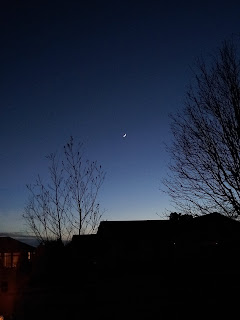
Hey world, I have just discovered a whole new type of poetry: prose poetry! This is such a great form of poetry, it sort of combines a short story with a poem. My poems do occasionally tend to go on a bit, so when I put it into a mini story it makes a lot more sense, but still has the expressive element of poetry. I wrote my first ever prose poem this week on March 14th, and it is called Sapphire Dusk : The bleeding sun sinks down behind the horizon, trailing her bright fingers across the heavens, beckoning to the shy stars that advance towards her dying halo.The sun’s whisper of tomorrow echoes through the trees softly, as her golden head disappears. The moon’s arms loosen reluctantly, and he lets her slide down out of sight, a burning jewel on the skyline, their kiss closing the day. The moon rises slowly, and takes his place among the diamonds that are rapidly populating the heavens. Down below the stars’s midnight dance, quiet has settled on the land. The trees are still, and...

Pied Beauty-Gerard Manley Hopkins

Image
Hey world. This week I've got a gorgeous poem by Gerard Manley Hopkins that is just bursting with colours: Glory be to God for dappled things – For skies of couple-colour as a brinded cow; For rose-moles all in stipple upon trout that swim; Fresh-firecoal chestnut-falls; finches’ wings; Landscape plotted and pieced – fold, fallow, and plough; And áll trádes, their gear and tackle and trim. All things counter, original, spare, strange; Whatever is fickle, freckled (who knows how?) With swift, slow; sweet, sour; adazzle, dim; He fathers-forth whose beauty is past change: Praise him. This poem is such a fantastic celebration of life and imperfection. As you'll note, none of the things listed in the poem are flawless. Here Gerard Manley Hopkins creates a pied collection of minor things that today I feel that people overlook or simply don't notice, instead we are all looking at one screen or another. See, ...

Negative Capability (2) Ode To A Grecian Urn Analysis

Image
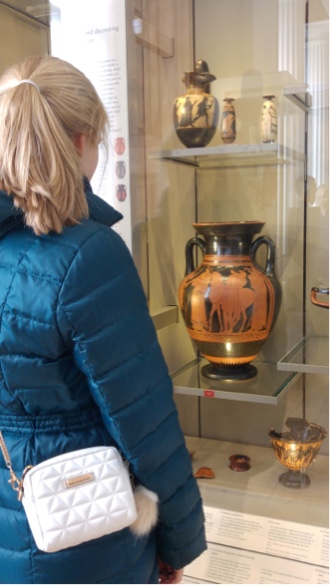
Hey world, Following on from the previous post where I discussed Keats's theory of Negative Capability and what exactly it meant, I am now going to look at and analyse seemingly the only poem of his where critics agree that we can observe the application of his theory. Critics suggest that his 'Ode to a Grecian Urn' is the best available example of the poet actually exercising the elusive 'negative capability' of which he wrote. The reader can see this in the way he poses questions to the 'silent form', interrogating whatever meaning it might convey rather than communicating his knowledge of the subject. Knowledge is just the notion that Keats urges us to forget about when considering the concept of negative Capability. Remeber- '... a life of sensation rather than thought.' Thou still unravish'd bride of quietness, Thou foster-child of silence and slow time, Sylvan historian, who canst thus express A flowery tale more sweetly than...

Negative Capability- What is Keats's message?

Image
Hey world. Ok, so today I'm going to tackle something a little more intense. I won't be doing a poem as usual, instead I'm going to be considering a literary term first introduced by John Keats: Negative Capability. This is a literary and almost philosophical concept which is pretty hard to wrap your head around. I'm actually still trying to understand it myself. Keats first mentioned the idea in a letter in December 1817: '...several things dovetailed in my mind, & at once it struck me, what quality went to form a Man of Achievement especially in Literature & which Shakespeare possessed so enormously – I mean Negative Capability, that is when a man is capable of being in uncertainties, Mysteries, doubts, without any irritable reaching after fact & reason – Coleridge, for instance, would let go by a fine isolated verisimilitude caught from the Penetralium of mystery, from being incapable of remaining content with half knowledge.' Essenti...

Beyond The Sea

Image
Hey world, here's my most recent poem, ' Beyond The Sea', which I wrote on January sixth. I went to the beach, and sat down on the hard stones and shells, Watching the deep, scarred skin of the ocean, constantly shift From form to form, Thinking. Someone told me once the ocean could tell us things if we listened hard enough. Though that was long ago, I sit and listen. The ragged breath of the tide repeats itself, Rhythmically clawing it’s way up the sand with desperate fingers, The seaweed chariots drawn by white foamy horses Ride the surf before turning around and continuing the race back out to sea. The salty air is a physical thing, a rough, cool hand tousling my hair. I pick up a stone, smoothed by the ocean’s touch. The gulls wheel above, and cry out their songs of woe. So I gaze out at the stormy waters, Thinking of times long Long ago. -A. Heezen

The Moon And The Yew Tree

Image
Hey world. So, this week to celebrate the one year anniversary of Haiku Hopscotch (!), I have decided to ponder and analyse 'The Moon and The Yew Tree' by Sylvia Plath. This is the light of the mind, cold and planetary The trees of the mind are black. The light is blue. The grasses unload their griefs on my feet as if I were God Prickling my ankles and murmuring of their humility Fumy, spiritous mists inhabit this place. Separated from my house by a row of headstones. I simply cannot see where there is to get to. The moon is no door. It is a face in its own right, White as a knuckle and terribly upset. It drags the sea after it like a dark crime; it is quiet With the O-gape of complete despair. I live here. Twice on Sunday, the bells startle the sky -- Eight great tongues affirming the Resurrection At the end, they soberly bong out their names. The yew tree points up, it has a Gothic shape. The eyes lift after it and find the moon. The moon is my mother. She is not sweet lik...

Henry Wadsworth-Longfellow

Image
Hey world! Currently I am vacationing in Portland Maine. Today I decided to go check out Henry Wadsworth Longfellow's house, which is located right in the middle of Portland. Situated on a busy cobbled street, this colonial style house was the boyhood home of the beloved poet Longfellow. For those of you who aren't familiar with this poet let me give a brief synopsis. Longfellow was born here in Portland Maine in 1807, he was the second of eight children. At the time Maine was still part of Massachusetts, and hadn't been split (1820). His father Steven Longfellow was a lawyer and a congressman, and expected Henry to follow suit in this career. From an early age he showed an interest in modern languages and went on the speak four. In these days one would learn Greek, Latin and perhaps a bit of Hebrew. But not many new French, Spanish, German or Italian. Longfellow was a prolific writer from an early age-publishing his first poem when he was just thirteen! This po...